

Johnson Goes Again, the Budget Looms, and Chicago Weighs Its Bets
By: Thom Serafin
September 28, 2026
Listen To Podcast



As autumn arrives in Chicago, the city’s civic and political conversations are converging on a set of questions that will define the next two years. Mayor Johnson has declared he is running again and will not change course. An $882 million budget gap waits on the other side of a February election. Crime statistics have reached multi-decade lows while public confidence in safety has not fully followed. A new ballpark concept has dropped in the South Loop. And from Washington, a $5,000 promise to every American has raised eyebrows. This month’s Power Poll asked Chicago’s civic, business, and community leaders to weigh in on all of it.
1 – Mayor Johnson announced Sunday he will seek a second term and will not change course. Your reaction?
- 15% – He has a path if crime stays down and the budget fight doesn’t blow up
- 9% – Looks like he’s a sure bet to make the runoff
- 28% – He makes it through February but loses the April runoff
- 42% – The field beats him in February — he never makes the runoff
- 6% – Uncertain
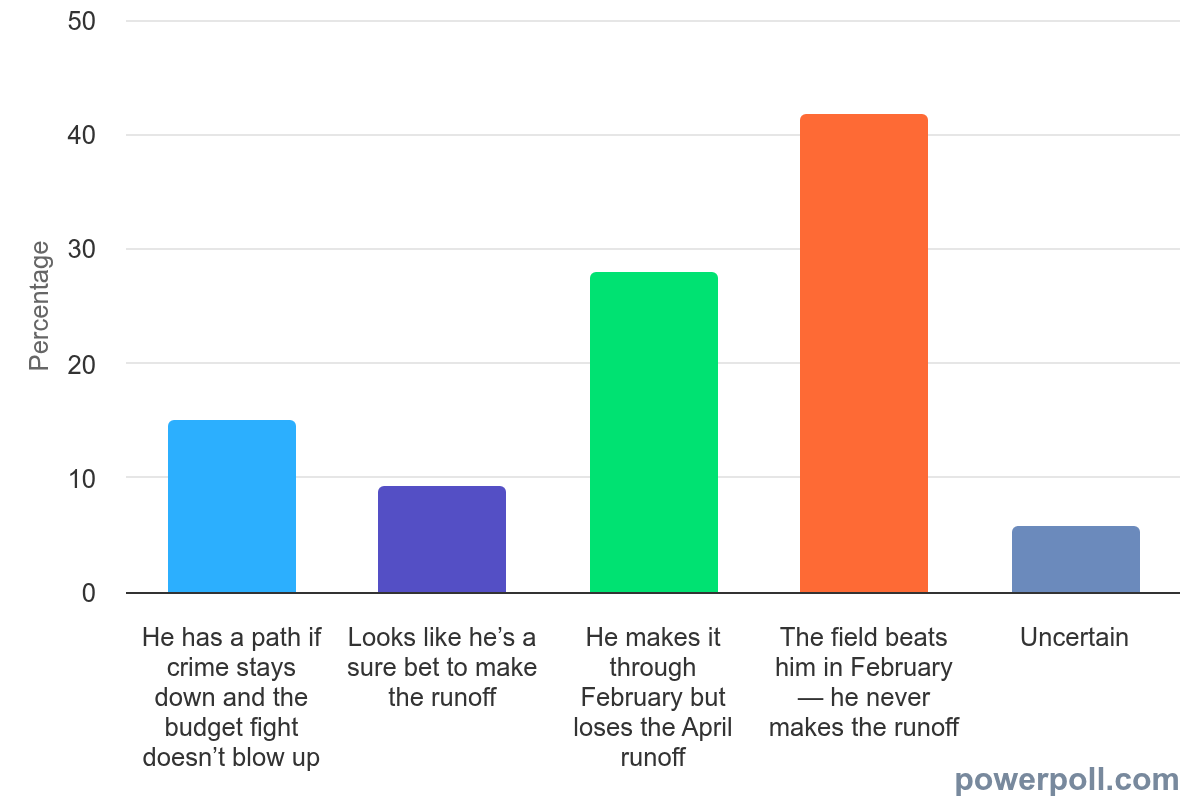
The Power Poll community is skeptical. 70% of our respondents believe Mayor Johnson either loses outright in the February primary or fails to survive into a runoff, with 42% predicting he never clears the primary at all. Only 9% view him as a sure bet to advance, and just 15% see a viable path for him — and those attach conditions. Crime has to hold and the budget fight cannot become a defining liability heading into election season.
The announcement that he will not change course may energize his base, but among the Power Poll community it lands as an insufficient answer to a city that has spent months signaling its frustration. Whether the broader electorate shares that verdict will be the defining question of the next six months.
2 – Chicago faces an $882.4 million gap in the 2027 budget — smaller than last year’s scare number, still an election-year hole. First move that matters?
- 8% – Tax the largest employers/high earners (“progressive revenue”)
- 1% – Property tax increase
- 36% – Real cuts at City Hall
- 1% – Borrow/refinance past February
- 37% – Mix — but cuts first
- 15% – Don’t pretend TIF surplus and one-time tricks close a structural gap
- 2% – Uncertain
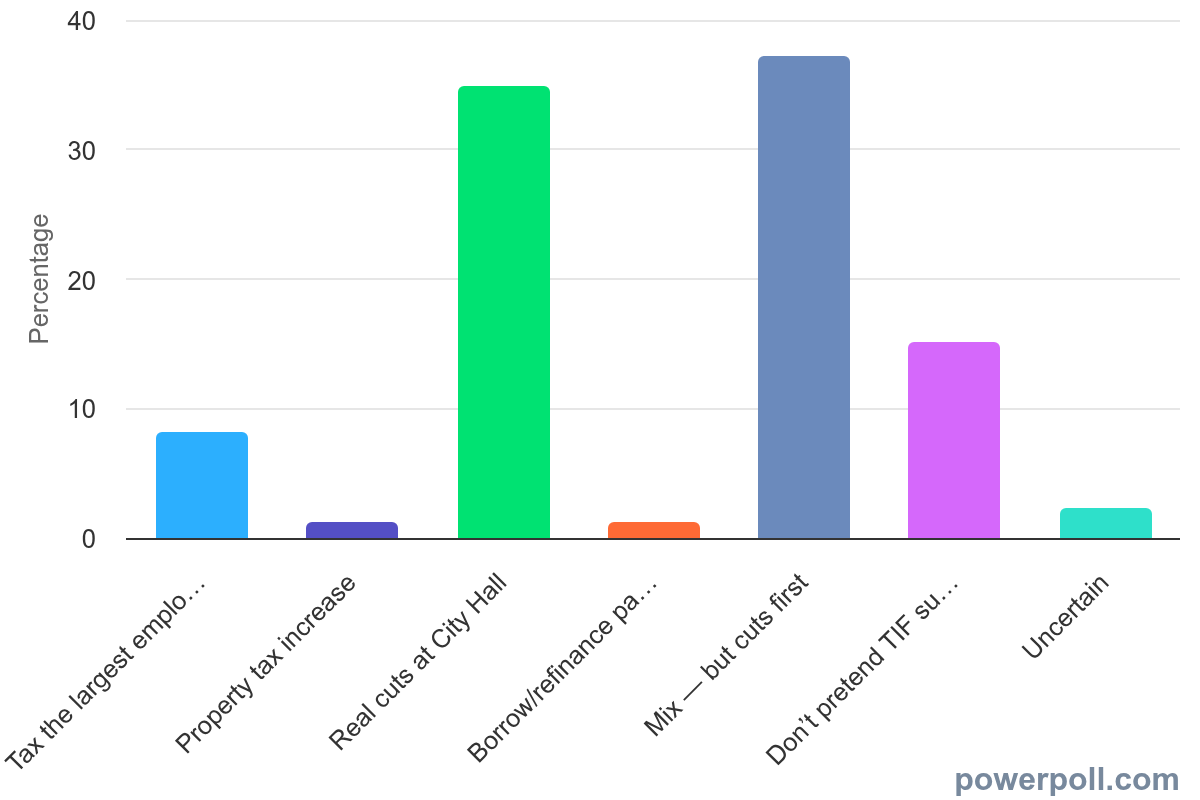
There is near consensus here, and it does not favor new revenue measures. 36% say the first move should be real cuts at City Hall, and another 37% support a mixed approach but explicitly with cuts leading. Together, 73% of our respondents place structural spending reductions at the front of the line. Only 8% back progressive revenue as a first move, and 1% support a property tax increase: a figure that reflects just how politically radioactive that option has become in an election year.
The 15% who flagged one-time gimmicks as the core problem may be naming the frustration that underlies every other answer.
3 – Homicides and shootings are near multi-decade lows. Summer 2026 was the quietest since the mid-1960s. What do you believe?
- 8% – The drop is real and under-credited
- 25% – The stats miss CTA, retail theft, and street disorder
- 22% – Too many neighborhoods still don’t feel safe
- 43% – All are true; numbers improved and confidence has not
- 2% – Uncertain
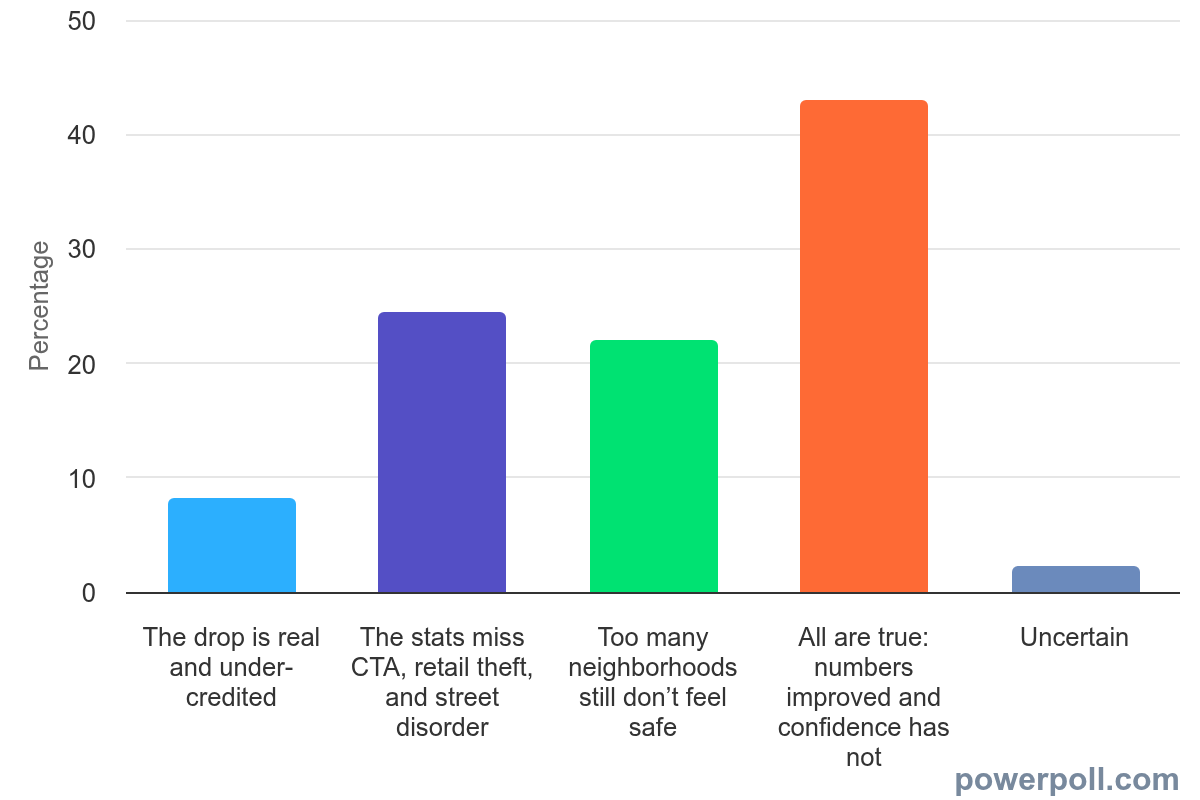
43% of our respondents chose the most nuanced option on the table: the numbers improved and the confidence has not. The progress on homicides and shootings is real. The daily experience of disorder on the CTA and in neighborhood commercial corridors is also real, and for many Power Pollers the two are not mutually exclusive.
Only 8% say the improvement is real and under-credited, suggesting that even those who acknowledge the trend believe it is not being communicated or felt broadly enough. 25% believe the headline statistics miss significant parts of the public safety picture, and 22% say neighborhoods simply do not feel safe yet.
Chicago’s leaders must address this genuine communications challenge: the data has moved, and the lived experience has not.
4 – White Sox minority owner Justin Ishbia unveiled plans for a new “Railyards” ballpark in the South Loop, privately financed with potential public funding for roads, bridges, and transit infrastructure. Your call?
- 31% – Good for the city if the stadium itself stays privately financed
- 15% – Wrong — keep the Sox in Bridgeport and modernize Rate Field
- 6% – Another taxpayer infrastructure bill we can’t afford
- 26% – Fine idea, but only after a real deal on Amtrak and neighborhood impact
- 21% – Too early — this is a rendering, not a plan
- 1% – Uncertain
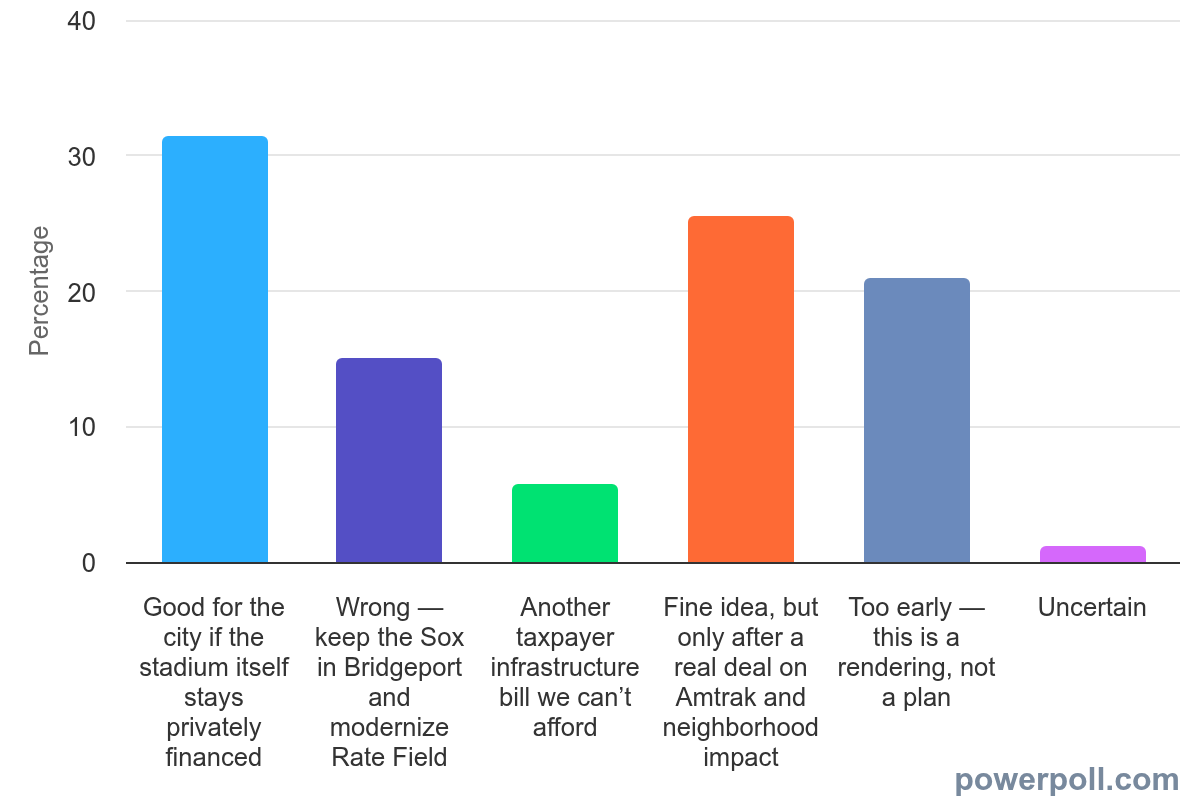
The Railyards proposal draws a conditional welcome from our respondents, not a clear endorsement. 31% are supportive as long as the stadium itself remains privately financed. Another 26% are open to the concept but want real agreements on the Amtrak relocation and neighborhood impact before committing. 21% are not ready to evaluate what they view as a rendering rather than a plan. The majority of the Power Poll community is in watch-and-see territory.
The 15% who want the Sox to stay in Bridgeport and modernize Rate Field represent a constituency skeptical of the entire premise. Only 6% frame the concern primarily around taxpayer exposure, which may reflect that the private financing commitment on the stadium itself has landed as credible enough to move past for most respondents. The public infrastructure piece is where the real scrutiny will live as this proposal develops.
5 – President Trump pledged a $5,000 “dividend” to every adult U.S. citizen if Republicans hold both the House and Senate in November, saying it will happen “100 %.” How should Chicago’s influentials treat that?
- 11% – Serious policy — share tariff/growth gains with households
- 49% – Campaign stunt that will never be funded
- 8% – Dangerous for inflation and the $40 trillion national debt
- 19% – Illegal or improper if it is tied to an election outcome
- 6% – Fine as politics, irrelevant to how Chicago should budget
- 6% – Wait and see — he has promised dividends before that did not arrive
- 1% – Uncertain
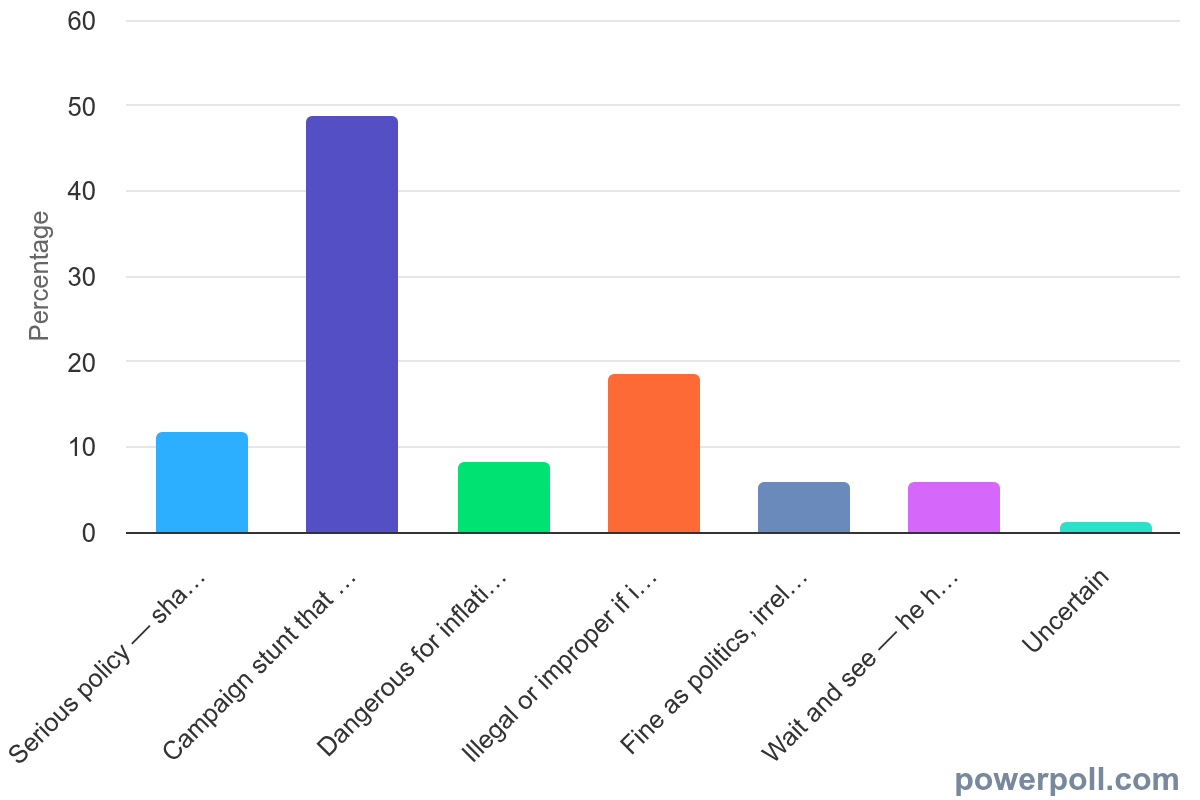
Nearly half of our respondents, 49%, call this a campaign stunt that will never be funded. Another 19% go further, questioning whether tying a federal payment to a midterm election outcome is legally or ethically sound. 8% flag the fiscal danger to a national balance sheet already carrying $40 trillion in debt. Therefore, roughly three-quarters of the Power Poll community treats this proposal as something other than serious governance.
11% do take it seriously as a mechanism for returning tariff or growth revenues to households, which is a legitimate policy debate worth having on its own terms. This proposal, however, may not survive long enough to have it.
6 – Mayor Johnson’s kickoff put a moratorium on new data centers and higher taxes on high earners at the center of a second term. What should Chicago do?
- 22% – Build the tax base — data centers, headquarters, and Loop occupancy come first
- 7% – Tax high earners and slow data centers; the city already gives too much away
- 26% – Moratorium is theater — write rules on power, water, and PILOTs and take the deals
- 3% – Fine to tax wealth; not smart to tell the next Amazon or Microsoft to locate in Indiana
- 36% – Irrelevant until City Hall can pass a budget that does not lean on one-time money
- 6% – Uncertain
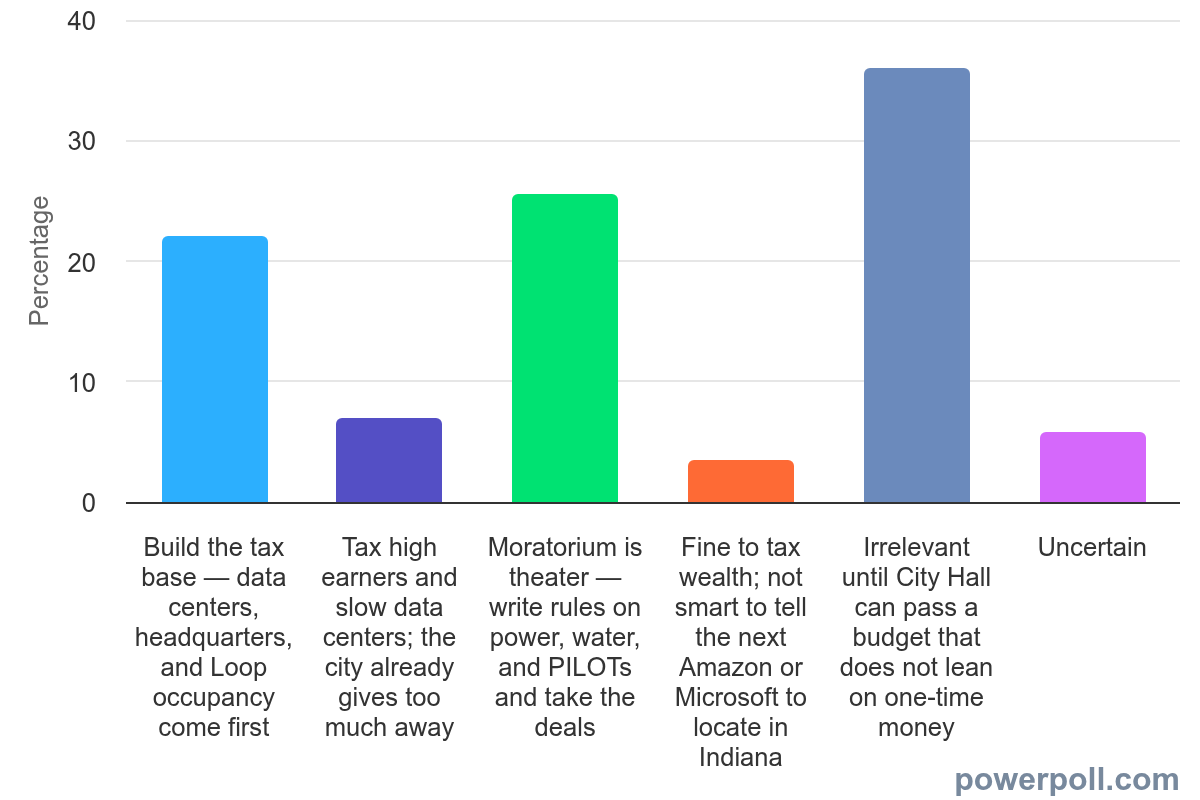
36% of our respondents say this debate is irrelevant until City Hall produces a budget that does not depend on one-time transfers and accounting maneuvers — which is itself one of the sharpest verdicts this community can deliver. Among those who engage on the substance, 26% say the moratorium is political theater, and the city should write real rules on power, water, and payments in lieu of taxes and take the investment. 22% say building the tax base through data centers, headquarters, and downtown occupancy should lead.
Only 7% support the Johnson framing as stated. 3% make the most pointed observation in the set: taxing wealth may be defensible, but signaling to the next major technology employer that Indiana is a better option is not. For a city competing nationally for capital and headquarters, that tension is not abstract.
7 – Should there be a slowdown in the development of artificial intelligence?
- 63% – Yes
- 37% – No
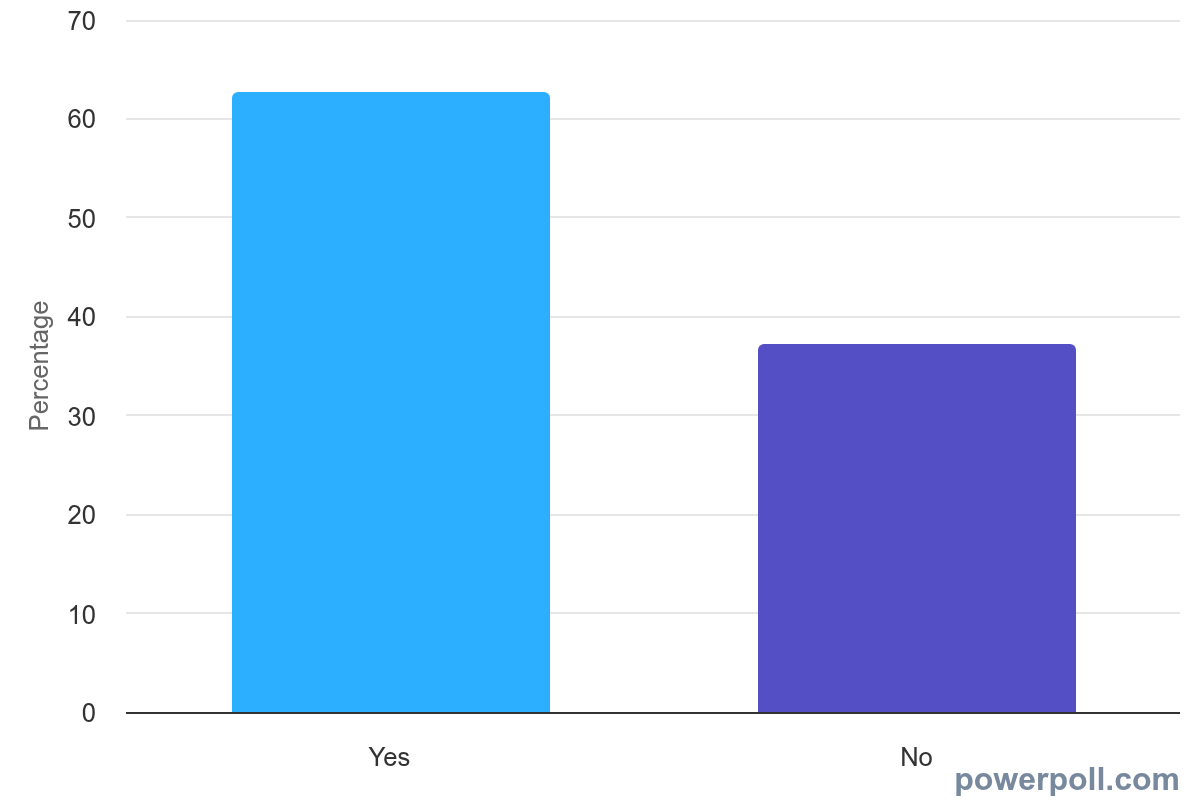
A clear majority of our Power Poll respondents, 63%, favor some slowdown in AI development. That is a striking signal from a community that skews toward business and civic leadership, groups that have generally embraced technology as an economic engine. The result tracks with a broader national mood: the enthusiasm for AI’s potential coexists with genuine unease about whether the guardrails are keeping pace with the technology.
The 37% who say no likely view a slowdown as both unenforceable and economically self-defeating, particularly given how much Chicago has riding on the data center and technology-employer sector, as the responses to Question 6 make plain. The tension between those two positions is a live conversation in boardrooms, policy offices, and university research centers across the region.
The Takeaway
This month’s Power Poll captures a civic community that is clear-eyed, skeptical, and ready for structural answers. Mayor Johnson’s re-entry generates doubt rather than momentum. The budget debate has produced broad agreement that real cuts must lead. The city’s improving crime statistics are acknowledged but have not yet rebuilt confidence on the ground. And on questions ranging from a South Loop ballpark to a presidential cash pledge, our respondents keep drawing the same distinction between a rendering and a plan, between a stunt and a policy, between declaring a problem solved and actually solving it.
Chicago’s influentials are not disengaged — far from it. They are watching closely, thinking carefully, and keeping score. The next six months will reveal whether anyone in the field is prepared to meet the moment with the kind of leadership this community is clearly waiting for.
The Serafin Power Poll sponsored by Mercury Public Affairs captures the perspectives of regional decision-makers and thought leaders in the Chicago metropolitan area. While not a scientific survey, it offers a clear and insightful gauge of prevailing sentiments, much like a reliable weathervane tracking the direction of Chicago’s winds.
Share this Post
